
China offers an unusually broad coffee machine supply base: capsule platforms, automatic bean-to-cup machines, semi-automatic espresso equipment, drip makers and grinders can come from suppliers within the same industrial region. That range creates choice, but it also makes supplier selection the most important part of the project.
A polished catalogue, a low initial quotation or a long list of certificates is not enough. A buyer needs evidence that the proposed model can be manufactured consistently, that the documents apply to the exact build and that the supplier will remain accountable after the deposit is paid.
This guide sets out a practical process for distributors, retail chains and private-label buyers. The same checklist can be used before a factory visit, during video verification or when comparing several quotations.
Do not compare coffee machine prices until the model suffix, voltage, plug, packaging, document set and service scope are fixed. Before that point, the quotations describe different products.
1. Start with the commercial requirement, not the supplier
Define the market before looking for a supplier. A capsule machine for a supermarket shelf has different requirements from an automatic machine sold through appliance distributors or a semi-automatic espresso machine supported by a specialty retailer.
Write down the destination country, sales channel, expected first order, annual volume band, target retail price, voltage, preferred machine format and the documents the importer must hold. This gives every supplier the same brief and prevents the purchasing team from comparing unrelated models.
Use the China coffee machine sourcing guide to map automatic, capsule and espresso formats to the selling channel before issuing an RFQ.
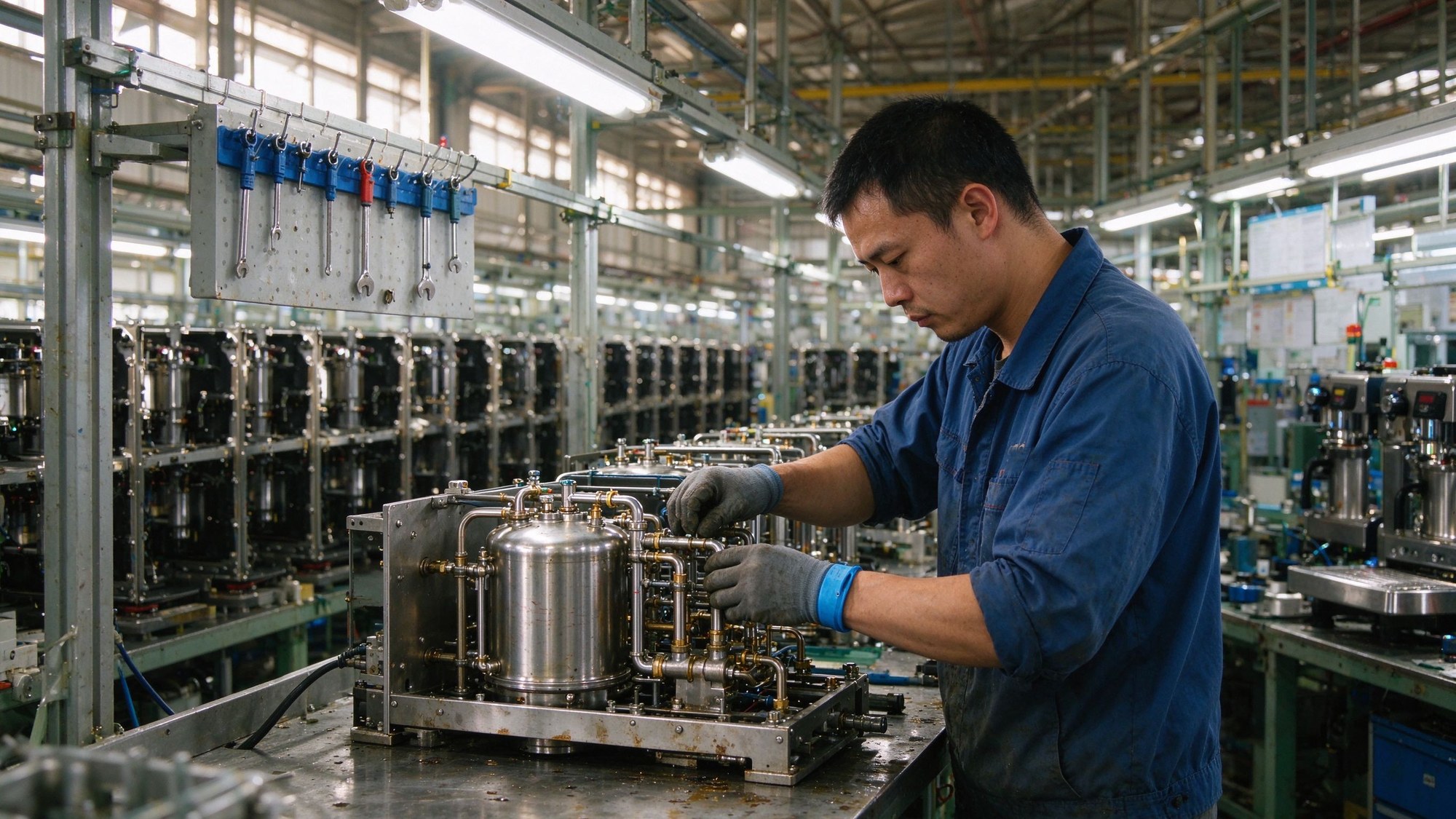
2. Verify the legal company, not just the website
Ask for the Chinese legal name, business licence, Unified Social Credit Code, registered address, bank beneficiary, factory address and the name of the legal manufacturing entity. These details should agree across the quotation, invoice, payment instruction and product documents.
China's National Enterprise Credit Information Publicity System (GSXT) is the official public company registry operated by the State Administration for Market Regulation. Search using the exact Chinese company name or 18-character credit code. The portal is mainly in Chinese, so request the Chinese legal name before checking it.
Treat mismatches as a stop signal until explained. A common example is a website brand, Hong Kong company, mainland factory and export receiving company all using different names. There may be a valid corporate structure, but the buyer should see the relationship in writing and know which entity is responsible for the contract.
3. Decide whether a factory or trading company fits the project
A trading company can be a strong partner when it controls specifications, coordinates several product families, provides English-language export support and manages quality inspections. A factory may have deeper process knowledge for its own platform. Neither model is automatically better.
| Question | What a factory should show | What a trading company should show |
|---|---|---|
| Manufacturing identity | Factory licence, site address, production lines and the exact model manufactured there | Named factory relationship, audit evidence and responsibility for specification and inspection |
| Range fit | Platforms and components controlled by the factory | Traceable source for each product family and a clear model matrix |
| Quality control | Incoming, in-process and end-of-line records | Approved inspection plan, sample custody and pre-shipment evidence |
| Accountability | Warranty and spare-parts responsibility in the agreement | Written responsibility for the factory, documents and after-sales escalation |
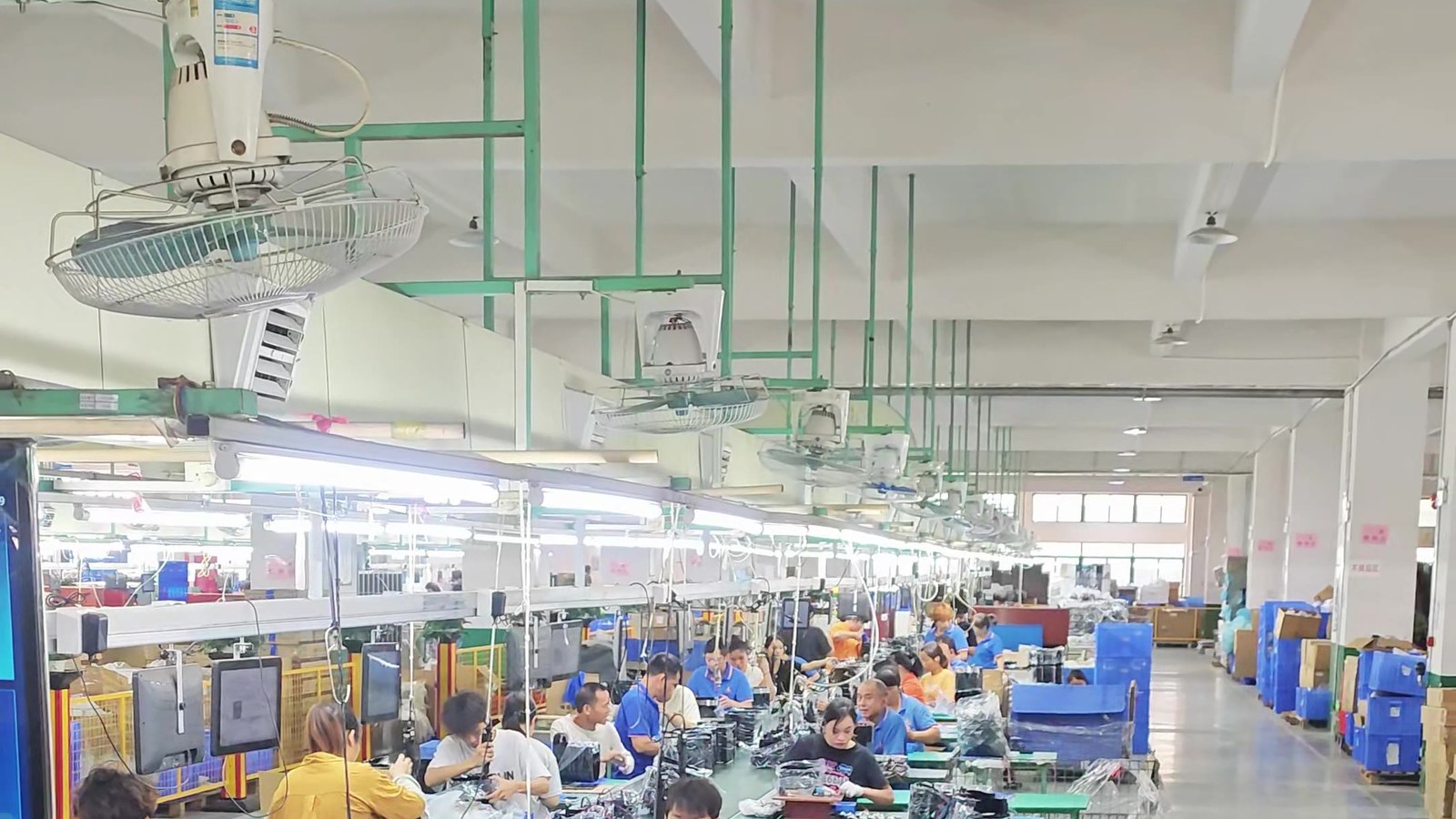
4. Request model-specific product evidence
The quotation should identify the exact model and version suffix, not only a series name. Ask for a product specification, labelled photographs, user manual, voltage and plug version, packaging artwork, accessory list and the bill-of-materials changes that separate similar models.
For any product claim, ask who owns the evidence. “CE available,” “ISO certified” and “food-grade” are not useful until the buyer sees the declaration, report holder, model scope and destination. The same logic applies to energy, pressure, capacity and drink-menu claims.
European CE marking is a manufacturer's conformity process supported by technical documentation, not one universal certificate. Review the EU declaration of conformity and applicable test reports for the exact model. The European Commission explains the framework in its official CE marking guidance.
5. Verify certificates through the relevant source
Certification checks should go beyond a PDF copied into a sales presentation. Confirm the certificate number, holder, issuing body, product scope, factory and expiry date. Check whether the product model and voltage in the certificate match the proposed build.
- Use IAF CertSearch to check accredited ISO 9001, ISO 14001 and other management-system certifications covered by the participating certification bodies.
- Use the official CQC certificate query page where a China Quality Certification Centre certificate is part of the file.
- Search the EU Safety Gate for product-safety alerts in Europe.
- Search the US CPSC recall database for relevant North American recalls.
A certificate can be authentic but irrelevant. A valid ISO 9001 certificate, for example, supports a management-system claim; it does not prove that every machine model complies with electrical safety or food-contact requirements.
6. Test the sample as a specification-control exercise
The sample should test more than whether the machine makes coffee. It should show whether the supplier can translate the approved brief into a repeatable build. Use the same checklist across suppliers and record objective results.
- Confirm the model suffix, serial or sample ID, voltage, plug, firmware and accessory set.
- Inspect the housing, tank, brew unit, grinder, milk system, seals and connections.
- Run the complete drink menu and record cycle time, temperature, noise and leakage observations.
- Review cleaning, descaling, milk hygiene and service access with the person who will support the product.
- Inspect the retail carton, manual language, labels, barcode and drop-test evidence.
- Photograph critical components and sign the golden sample and specification sheet.
A perfect hand-built sample does not prove production consistency. Ask how the sample differs from mass production and which critical checks are recorded at the end of the line.
7. Check intellectual-property and compatibility risk
Capsule compatibility can involve trademarks, design rights and patents that differ by country. Ask for the exact capsule format, compatibility wording and any market restrictions. Do not use a third-party trademark as if the supplier is licensed or endorsed.
Use WIPO's Global Brand Database as an initial trademark research tool, then obtain local legal advice for high-value brands or disputed territories. The buyer should also confirm ownership of its own logo, artwork and packaging files.
8. Score the supplier on evidence, not presentation
| Verification area | Points | Evidence that should pass |
|---|---|---|
| Legal identity and ownership | 15 | Chinese company name, USCC, GSXT record, bank beneficiary and contracting entity agree |
| Manufacturing and process control | 20 | Named factory, production route, equipment, sub-supplier control and capacity evidence |
| Product and specification control | 20 | Exact model suffix, BOM, manual, photos, packaging and signed sample |
| Compliance evidence | 20 | Applicable certificate, holder, scope, model, voltage and destination all align |
| Quality and shipment inspection | 15 | Incoming checks, end-of-line tests, AQL plan, traceability and pre-shipment records |
| Commercial and after-sales service | 10 | Incoterms, lead time, warranty, spare parts, escalation and document matrix |
Use 100 points as a discussion tool, not a substitute for judgment. A supplier that cannot explain the legal manufacturer, certificate holder or bank beneficiary should not receive a deposit merely because the sample works.
9. Ask ten questions before the first purchase order
- What is your Chinese legal name, Unified Social Credit Code, USCC and contracting entity?
- Who is the legal manufacturer and factory for this exact model and version suffix?
- Which parts, software and accessories are standard, and which are optional?
- Who holds each certificate and which models, voltages and factories are covered?
- What are the critical-to-quality checks and end-of-line tests?
- What inspection standard will apply before shipment, and who records the result?
- What is the spare-parts list, warranty process and response path?
- What packaging, barcode, manual and data requirements apply to the destination?
- Can production remain within the approved sample and BOM without written approval?
- Which team member is accountable for engineering, documents, production and after-sales?
10. Turn the answers into a controlled RFQ
The final RFQ should combine product selection and written evidence. Include the destination, machine format, model, voltage, plug, drink menu, packaging, annual volume, inspection standard, document matrix, spare-parts scope and first-order timing.
A supplier that answers in detail is not automatically the winner, but a supplier that avoids these questions creates hidden project risk. The best sourcing process leaves a written trail from enquiry to sample, purchase order, production inspection and spare-parts support.
Use the European RFQ checklist for market-specific questions and the private-label programme guide when artwork, tooling or packaging changes are involved.
Official sources and verification tools
- National Enterprise Credit Information Publicity System (GSXT)
- IAF CertSearch accredited-certificate database
- China Quality Certification Centre certificate query
- European Commission CE marking guidance
- EU Safety Gate alerts
- US Consumer Product Safety Commission recalls
- WIPO Global Brand Database
External links open in a new tab. The tools support verification but do not replace a model-specific document review, factory audit or local legal advice. MENBRO TECH is not affiliated with the publishers.