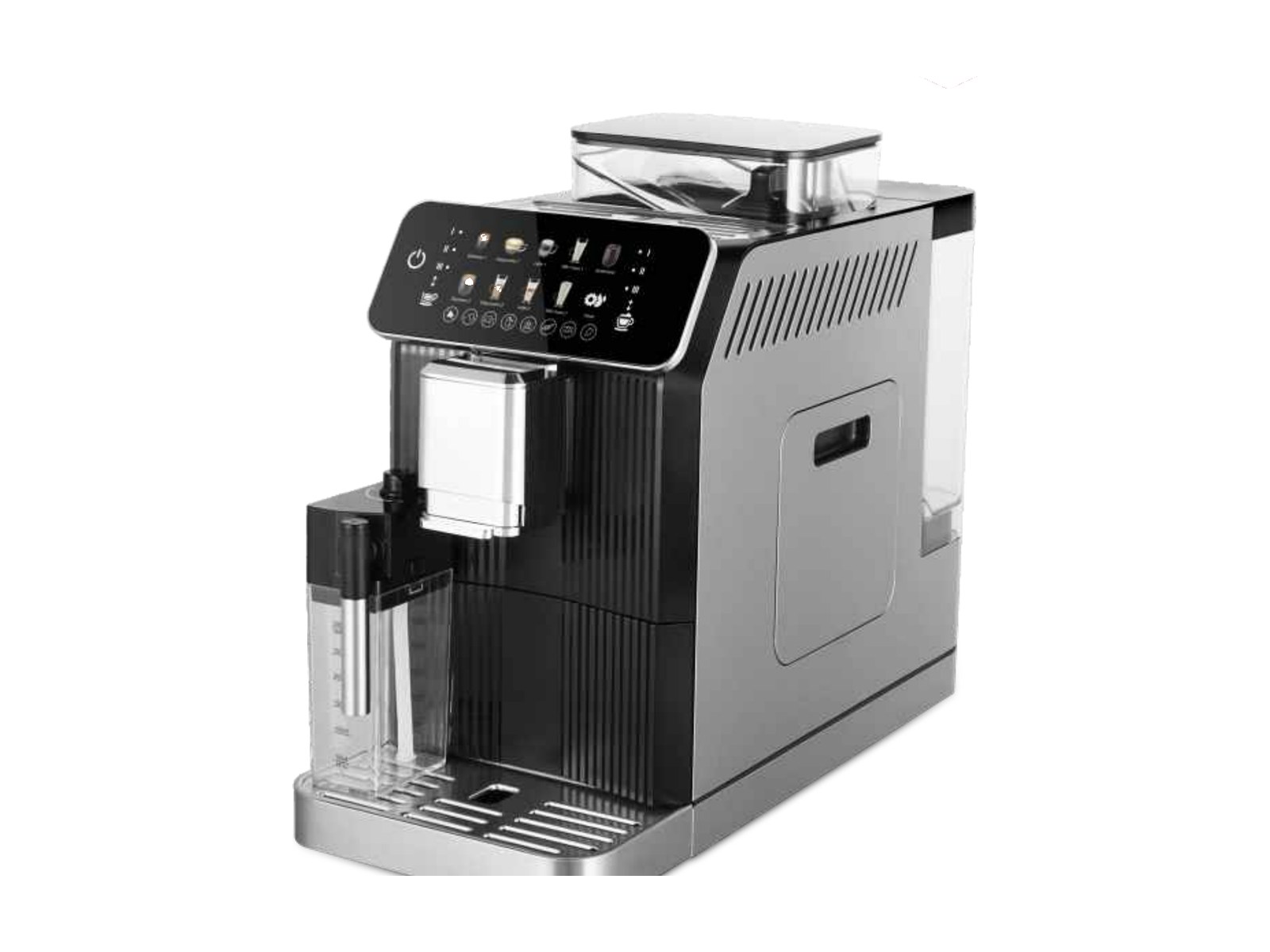
The automatic category used to be easy to explain: one or two premium models, a high price and a specialist counter. The current catalogue ladder is wider. A buyer can now choose a 1.0 L automatic with a 120 g hopper for a small counter, a 1.5 L model with a 300 ml milk tank for a family-oriented shelf, or a 2.3 L stainless-steel unit with a removable brew unit for heavier use.
The specification differences matter more than the model count. A 15 bar pump, a conical burr grinder and a 300 ml milk tank are the baseline for a one-touch cappuccino or latte. A 7-inch TFT screen, cold-brew programmes and a usage counter belong to a different price and training story. A 500 ml removable milk tank changes the cleaning routine; a stainless-steel housing changes the perceived quality and the weight.
For a retailer, the automatic shelf needs four things behind it: a working demo, a water and milk routine, a cleaning routine, and a spare-parts route. Without those, the machine is returned or left in the stockroom. The best model for a store is not the one with the longest drink menu; it is the one the staff can demonstrate and clean between customers.
For a distributor, the opportunity is the trade-up. A shopper who already buys capsules can be moved to a compact automatic without being asked to learn a manual espresso workflow. The capsule pack remains the entry; the automatic machine captures the fresh-bean repeat purchase. That is a range story, not a single-SKU story.
Trade fairs are still the fastest way to compare the category in person. Use the show directories to shortlist platforms, then ask for the model-specific specification and spare-parts list before you commit to a container.