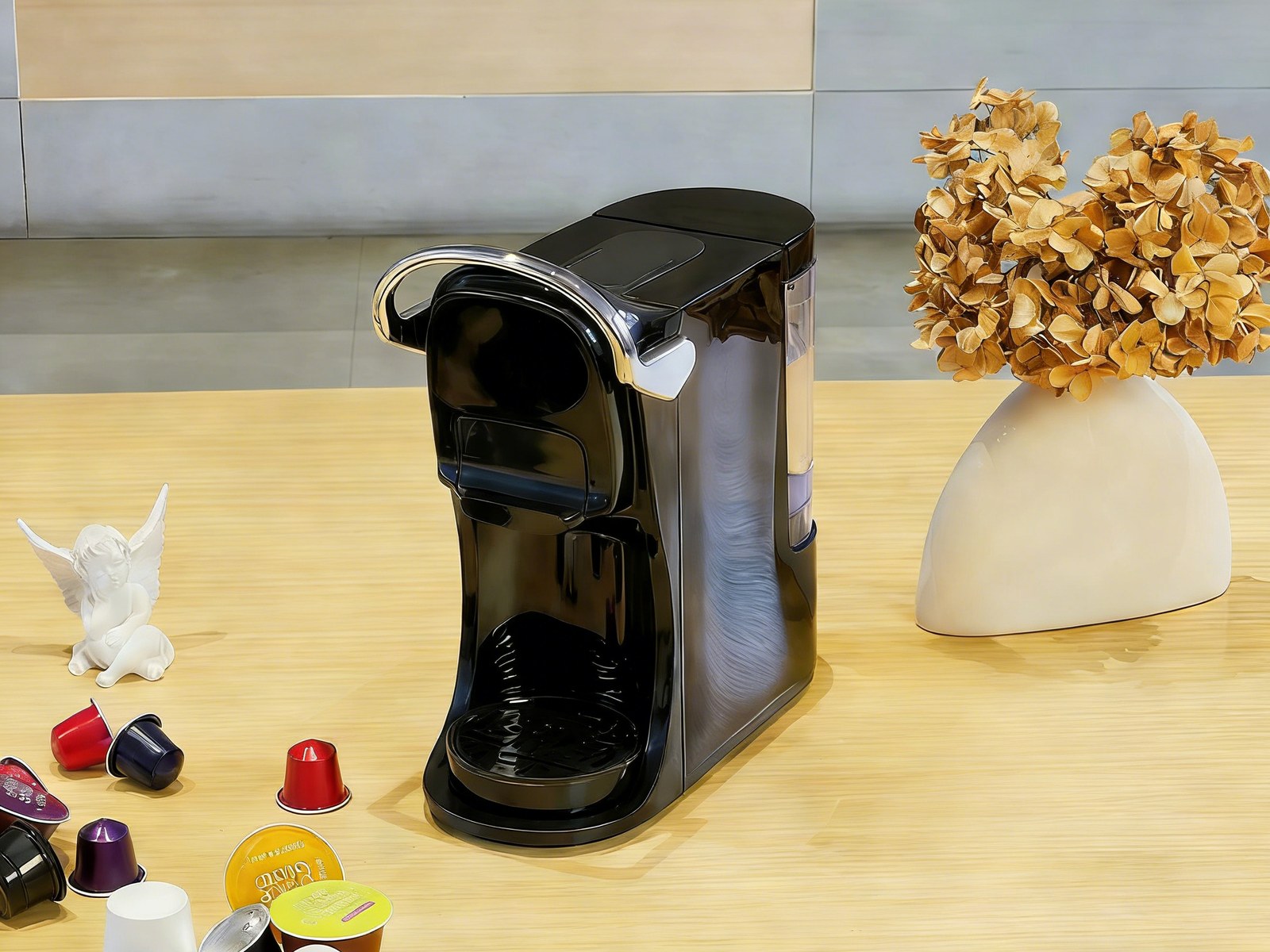
Capsule machines remain the lowest-friction entry into home coffee. The consumer buys a machine, a capsule pack and a routine in one trip. That is why capsule fixtures still anchor the category in many supermarkets and electrical chains, even where fresh-bean machines get more attention.
Bean-to-cup sits above that entry point. It asks the shopper to buy beans, fill a hopper and clean a brew unit, but it delivers a wider drink menu and a lower cost per cup over time. The two formats are not substitutes at the same price: they serve different shopping missions. A distributor that carries only one leaves the trade-up to a competitor.
A practical shelf is often three steps: a compact capsule machine for trial, a multi-capsule or capsule-plus-grinder model for the good / better step, and one automatic bean-to-cup model for the shopper who has already decided to move to fresh beans. The automatic model does not need to be the most expensive one. It needs a clear drink menu, a service route and a spare-parts story the retailer can repeat.
The mistake is over-ranging. Every extra housing adds a packaging format, a manual, a spare-parts line and a training burden. It is often better to range two capsule price points and one automatic platform than five machines that share neither parts nor packaging.
The category data is public but patchy by market. Use the Specialty Coffee Association and National Coffee Association research as a starting point, then check your own sell-through. A range decision should be made on local velocity, not on a global headline.